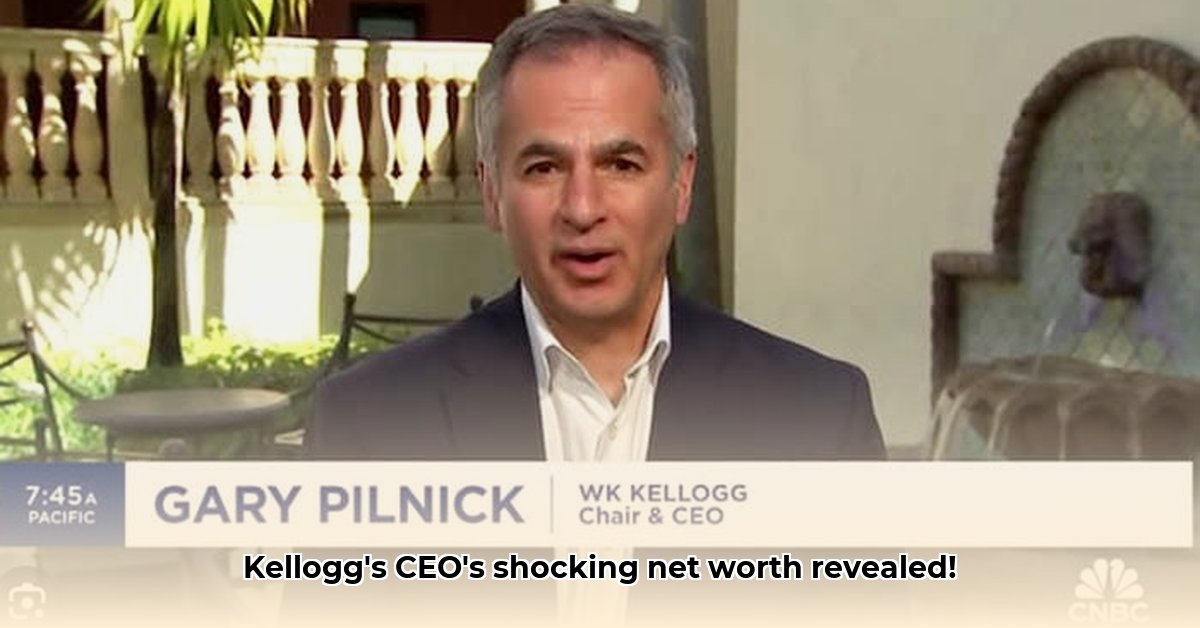
Gary Pilnick, CEO of Kellogg's, boasts a substantial net worth, estimated at over $15.8 million. However, his financial success is inextricably linked to a controversial public statement and raises questions about leadership, empathy, and the disconnect between corporate executives and the public. This article examines Pilnick's career trajectory, the fallout from his "cereal for dinner" remark, and the broader implications for corporate responsibility.
The Ascent and the Controversy
Pilnick's career at Kellogg's showcases a significant climb through the ranks, reflecting his business acumen and strategic thinking. His expertise in legal affairs and corporate development significantly contributed to the company's growth. However, his recent comment suggesting that struggling families consider cereal for dinner sparked a significant public backlash. The statement, widely perceived as insensitive and out of touch, triggered widespread criticism across social media and traditional media outlets. This incident raises critical questions: Does a high net worth automatically translate to effective leadership? Does Pilnick's financial success overshadow a perceived lack of empathy for consumers facing financial hardship?
Deconstructing the Net Worth Narrative
The substantial sum representing Pilnick's net worth shouldn't be viewed in isolation. While it reflects his contribution to Kellogg's financial success, it's crucial to analyze it against the backdrop of the controversy. His wealth is a product of his business decisions and achievements, yet the negative impact of his ill-advised comment cannot be ignored. Therefore, a comprehensive evaluation requires analyzing his financial success within the context of his public image and leadership style. Is a large net worth a sufficient measure of a CEO's overall contribution to a company and society?
The Impact: Beyond the Headlines
The "cereal for dinner" controversy had far-reaching consequences. It impacted Kellogg's stock price, shook consumer trust, and raised questions about internal morale. The incident even sparked debate about executive compensation and corporate social responsibility. The controversy serves as a cautionary tale for other CEOs, highlighting the importance of thoughtful communication and understanding the potential ramifications of public statements. How will Kellogg's reposition itself following this incident? What measures are being implemented to rebuild trust and address the concerns raised by the public?
Navigating the Aftermath: Lessons for Future Leaders
The situation underscores the crucial need for effective crisis communication. A swift, transparent, and empathetic response is vital when dealing with a public relations crisis of this magnitude. A sincere apology, combined with tangible actions demonstrating a commitment to change, is essential to mitigating damage and restoring public trust. Pilnick's experience should serve as a case study in crisis management, demonstrating the delicate balance CEOs must strike between business success and public perception.
Key takeaways for future CEO's:
- Proactive Communication: Develop and implement a comprehensive communication strategy to address potential public relations pitfalls.
- Empathy and Understanding: Prioritize a deep understanding of the societal impacts of business decisions. Foster a culture of empathy and sensitivity within the organization.
- Transparent Accountability: Openly acknowledge mistakes and take responsibility for actions. Transparency fosters credibility and rebuilds trust.
- Long-Term Vision: Focus on implementing sustainable practices that prioritize corporate social responsibility alongside financial goals.
Gary Pilnick's story reveals the multifaceted nature of leadership success. While his financial achievements are evident, the controversy surrounding his public statements complicates a simple narrative of success. His situation serves as a reminder that effective leadership requires more than just financial acumen; it necessitates strong communication skills, emotional intelligence, and a commitment to corporate social responsibility.
The Million-Dollar Question: Executive Pay
Executive compensation often sparks heated discussions, sitting at the intersection of corporate governance, economic fairness, and shareholder value. It’s far more complex than just a high salary; a typical executive pay package comprises a mosaic of components designed to align leadership interests with company performance. This intricate structure usually includes base salary, annual bonuses tied to short-term targets, long-term incentive plans like stock options or restricted stock units, and various perks and benefits. Understanding this multifaceted package is crucial to grasping how top leaders are incentivized and rewarded.
Proponents argue that substantial compensation is necessary to attract and retain world-class talent, motivating executives to drive innovation, growth, and profitability in highly competitive global markets. They contend that linking pay to performance encourages executives to make decisions that benefit shareholders in the long run. However, critics frequently point to the ever-widening gap between executive and average worker pay, raising questions about fairness, wealth distribution, and the true impact of executive decisions on broader societal well-being. This ongoing debate ensures that executive compensation remains a focal point for investors, employees, and the public alike.